How Automated Wafer Preparation Enhances Fab Throughput

That is why more manufacturers are investing in automated wafer preparation systems. These systems help reduce interruptions during wafer movement and create a more stable production flow from one stage to the next.
Where Manual Wafer Preparation Creates Problems
- Delays during wafer loading and unloading
- Alignment inconsistencies
- Extra idle time between process stages
- Increased risk of handling errors
- Operator fatigue during repetitive tasks
- Workflow interruptions during peak production hours
These small delays may not look serious individually, but across thousands of wafers, they can affect overall fab performance in a noticeable way.
This is where wafer handling automation starts making a measurable difference.
How Automated Wafer Preparation Improves Workflow
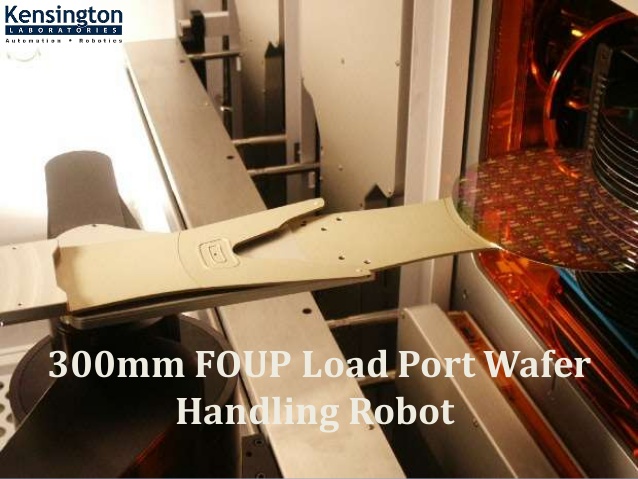
Automated systems are designed to handle repetitive preparation tasks with consistency. Instead of depending on manual interaction for every movement or alignment step, robotic systems manage wafer positioning with far greater repeatability.
A typical automated setup may include-
- Wafer orientation systems
- Robotic handling arms
- Alignment verification tools
- Transfer coordination software
- Integrated inspection systems
- Automated load port communication
When a wafer pre-aligner is integrated into the process, wafers can be positioned accurately before entering downstream tools. This reduces transfer interruptions and helps equipment continue operating without unnecessary pauses.
The biggest advantage is not simply speed. It is consistency. Consistent preparation creates a smoother production environment across the fab.
Better Throughput Starts with Fewer Interruptions
In semiconductor manufacturing, throughput is closely connected to how smoothly wafers move between production stages. If one section slows down, nearby tools may sit idle waiting for wafers to arrive.
Automated preparation systems help reduce those slowdowns by keeping wafer movement continuous and predictable.
Some direct operational benefits include-
- Faster wafer preparation cycles
- Reduced waiting time between tools
- Improved equipment utilization
- More stable production scheduling
- Lower dependency on manual handling
Over time, these improvements support stronger semiconductor manufacturing efficiency without requiring major changes to the entire production line.
The Growing Importance of Robotic Transfer Systems
Modern fabs rely heavily on precision movement. Wafers must travel safely between chambers, inspection stations, and process tools without positioning errors or contamination risks.
This is why robotic transfer systems have become such an important part of advanced manufacturing environments.
These systems help with-
- High-speed wafer transportation
- Accurate pick-and-place movement
- Stable robotic positioning
- Coordinated multi-tool transfers
- Reduced wafer contact during handling
Unlike manual transfer processes, robotic systems can maintain the same movement of accuracy repeatedly throughout long production cycles.
That reliability becomes especially important in high-volume fabs where even a small handling issue can affect multiple downstream operations.
Manual vs Automated Preparation
.jpg)
Supporting Long-Term Production Optimization
Automation is not only about increasing speed. Many fabs are now focusing on long-term production optimization, where stable workflow matters just as much as output numbers.
When automated preparation systems are connected with other manufacturing tools, fabs gain better coordination across the entire production environment.
This can help manufacturers-
- Improve scheduling efficiency
- Maintain cleaner production flow
- Reduce unexpected interruptions
- Support predictive maintenance planning
- Handle higher production volumes more effectively
As semiconductor processes become more advanced, these workflow improvements become increasingly valuable.
Why More Fabs Are Moving Toward Automation
The pressure on semiconductor manufacturers is growing every year. Devices are becoming smaller, process requirements are tighter, and production timelines are becoming harder to meet.
Because of this, fabs can no longer afford unnecessary handling delays or inconsistent wafer movement.
Many manufacturers now see automated wafer preparation systems as part of a larger strategy to improve operational stability. When combined with reliable wafer handling automation and intelligent robotic coordination, these systems help fabs maintain throughput without sacrificing precision.
The shift toward automation is not simply about replacing manual work. It is about creating manufacturing environments that can operate more smoothly under increasing production demands.
Final Thoughts
Any delay during wafer preparation and wafer transfer will eventually impact the efficiency of the fabrication process. This is precisely the reason why many semiconductor companies are considering automation in wafer preparation for better processing efficiency and smooth operation of equipment. Wafer pre aligner and other robotic systems are some of the solutions offered by manufacturers to facilitate easier wafer processing.
If you are looking for reliable wafer handling automation and precision robotics solutions for semiconductor manufacturing, Kensington Laboratories is a trusted name known for supporting modern fabs with advanced automation technologies and dependable engineering solutions.


Comments
Post a Comment